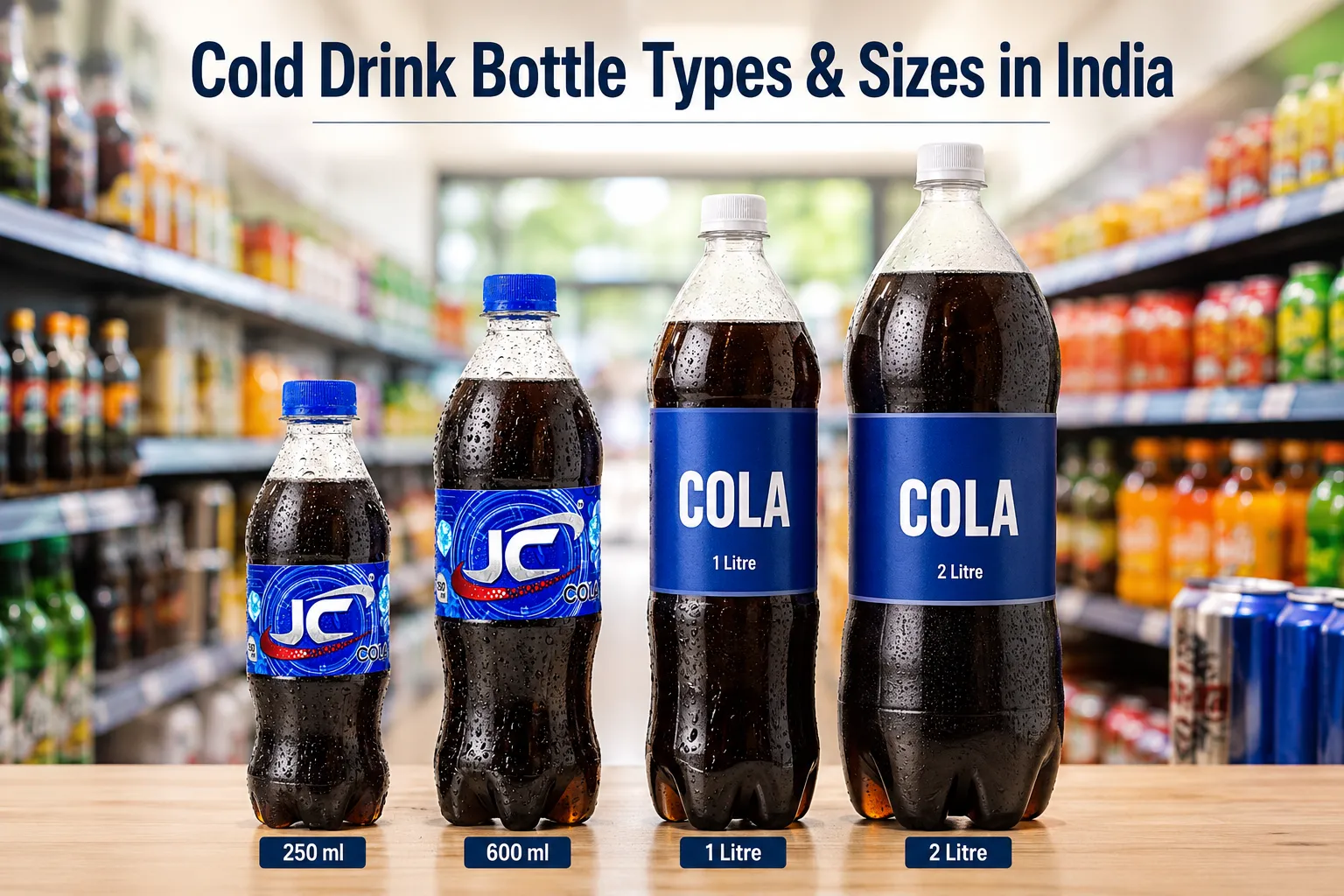
What Are the Different Types of Cold Drink Bottle and Sizes in India
Ever wondered why a cold drink tastes more refreshing when it comes in the right bottle size?
In India’s fast-growing beverage market, the demand for every type of cold drink bottle is rising sharply across metro cities as well as Tier 2 and Tier 3 towns. From busy roadside kiosks to modern supermarkets, cold drinks are now available in multiple packaging formats designed to match different consumer needs, price points, and drinking occasions.
In India, packaging is no longer just about storage—it is a powerful sales driver. A well-designed bottle not only locks in freshness and preserves taste but also plays a key role in influencing what consumers pick off the shelf. Today, the market offers a wide variety of drink bottle sizes, ranging from small single-serve packs to large family bottles, making beverages more accessible and convenient than ever before.
In this blog, we take a closer look at the evolution, types, and importance of cold drink bottles in India, along with key packaging trends and business insights that matter for FMCG brands, retailers, and distributors.
How Cold Drink Bottles Have Evolved in India’s Beverage Industry
The journey of the cold drink bottle in India reflects how the country’s beverage industry has modernized over time. In earlier decades, soft drinks were primarily sold in returnable glass bottles. These bottles were part of a deposit-based system, where consumers would pay a small extra amount and return the bottle after consumption. This model worked well when local distribution and limited retail networks dominated the market.
With the growth of modern retail, supermarkets, and advancements in manufacturing technology, the industry saw a major shift toward PET (polyethylene terephthalate) bottles. These bottles quickly became the standard in India due to their lightweight structure, lower production cost, and easy transportability—perfect for a vast and diverse distribution system.
Today, beverage packaging in India has evolved far beyond just glass and PET. The market now includes a wide range of innovative and consumer-friendly formats such as eco-conscious materials, resealable packs, and convenient single-serve packaging. This transformation in beverage packaging India highlights how brands are adapting to changing lifestyles, urbanization, and increasing demand for portability and convenience.
Common Cold Drink Bottle Sizes in India
One of the most important factors in the beverage industry is drink bottle sizes, as they directly influence pricing, consumer choice, and overall sales performance. In India, brands carefully design bottle sizes to match different usage occasions—from quick individual consumption to large family gatherings.
Popular Cold Drink Bottle Sizes Available in India:
1. 200 ml – 250 ml
- Designed for single-use consumption
- Commonly available in small retail shops, kiosks, and vending machines
- Ideal for impulse purchases and quick refreshment
2. 300 ml – 500 ml
- The most popular range among individual consumers
- Perfect for on-the-go lifestyles, travel, and daily use
- Widely preferred across urban and semi-urban markets
3. 600 ml
- A slightly larger single-serve option
- Increasingly preferred in Tier 1 and Tier 2 cities
- Offers better value without being too bulky
4. 1 Litre
- Family-size packaging option
- Common in households and small get-togethers
- Balances affordability with quantity
5. 2 Litres
- Value pack designed for families and parties
- Highly popular in supermarkets and wholesale retail channels
- Offers the best cost-per-ml value for consumers
These soft drink bottles are strategically developed to suit India’s diverse consumption habits, ensuring that brands can reach every segment of the market—from budget-conscious buyers to bulk household consumers.
Types of Materials Used in Cold Drink Bottles
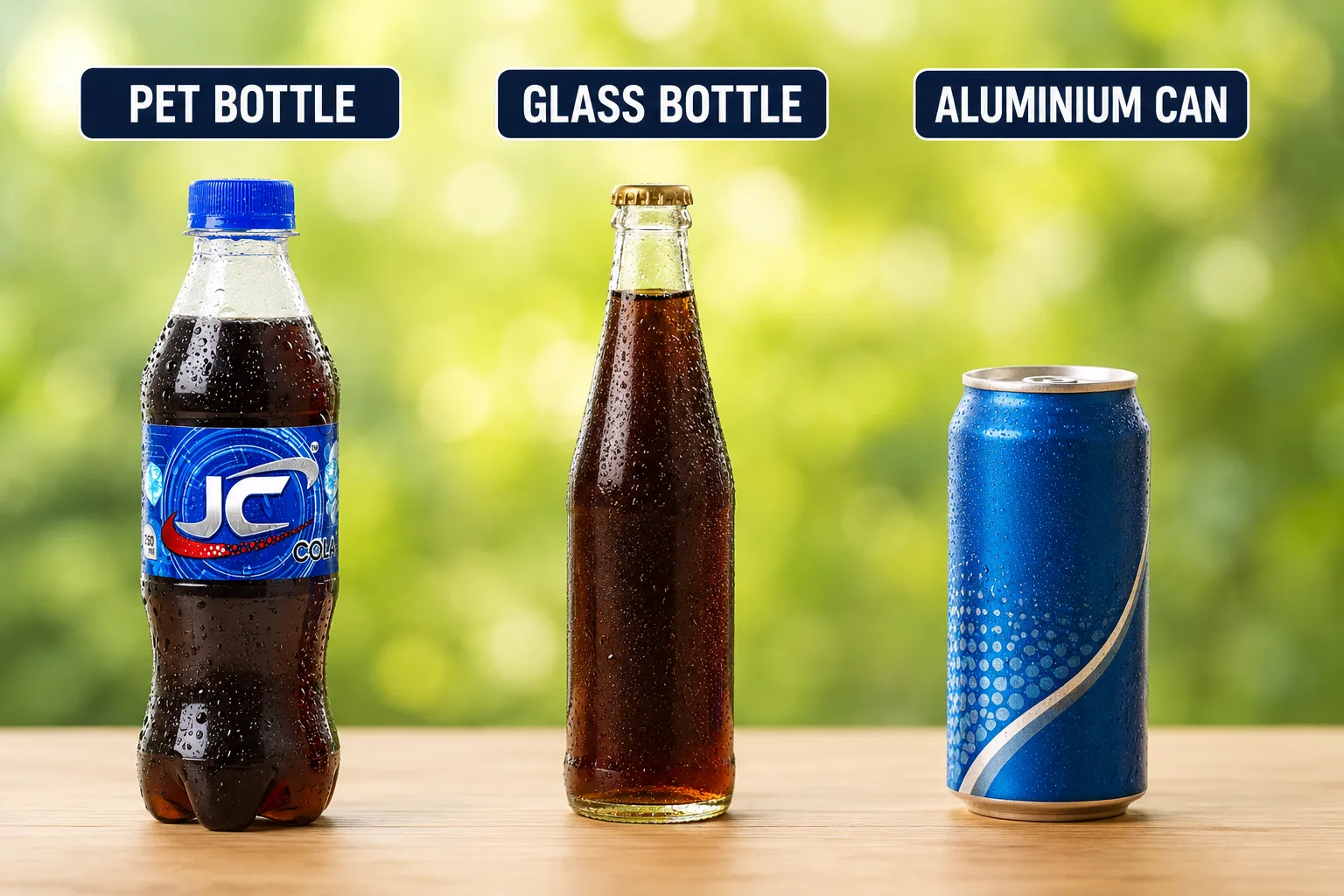
The choice of material plays a vital role in beverage packaging in India, as it directly impacts cost efficiency, product safety, shelf life, and consumer convenience. In the fast-growing FMCG sector, brands carefully select packaging materials based on target audience, distribution reach, and product positioning.
1. PET Bottles
PET (Polyethylene Terephthalate) bottles dominate the Indian beverage industry due to their lightweight structure, affordability, and recyclability. Most modern cold drink bottle packaging relies on PET because it is easy to manufacture, transport, and store across India’s extensive retail network. It is the most practical choice for mass-market soft drinks.
2. Glass Bottles
Glass bottles continue to hold relevance in premium and traditional beverage segments. They are known for maintaining taste integrity and offering a premium feel. However, their heavier weight and higher transportation costs make them less suitable for large-scale distribution compared to PET.
3. Aluminium Cans
Aluminum cans are steadily gaining popularity, especially in urban markets. They are compact, stylish, and highly portable, making them a preferred choice for energy drinks and premium soft beverages. Cans also offer strong protection against light and air, helping preserve flavor quality.
Each of these packaging formats serves a distinct purpose in the beverage ecosystem, allowing brands to cater to different consumer needs, price points, and market segments effectively.
Types of Cold Drink Bottles Comparison in India
| Bottle Type | Material | Use Case | Price Segment |
|---|---|---|---|
| PET Bottle | Plastic | Mass market, daily consumption | Low |
| Glass Bottle | Glass | Premium beverages, traditional markets | High |
| Can | Aluminium | Urban premium, energy drinks, travel use | Medium |
Beverage Packaging India Trends and Innovations
The beverage packaging India industry is evolving rapidly as brands focus on innovation, sustainability, and changing consumer lifestyles. With increasing competition and rising environmental awareness, companies are rethinking how every cold drink bottle is designed, packaged, and delivered to customers.
Key Packaging Trends in India:
- Eco-friendly and recyclable materials: Brands are increasingly shifting toward sustainable packaging solutions that reduce environmental impact and support recycling initiatives across India.
- Lightweight PET bottle designs: Modern PET bottles are being engineered to use less plastic while maintaining strength and durability, helping reduce overall production and transportation costs.
- Resealable caps for convenience: Consumers now prefer packaging that allows multiple uses. Resealable caps are becoming a standard feature, especially for larger drink bottle sizes.
- Smart labeling and branding techniques: Innovative labels, QR codes, and improved branding designs are helping companies engage better with consumers and improve product visibility on retail shelves.
- Smaller portion packaging for affordability: To cater to price-sensitive markets, especially in Tier 2 and Tier 3 cities, brands are introducing smaller packs that make beverages more accessible to a wider audience.
Today, beverage companies are actively working to reduce plastic usage, improve recycling systems, and adopt greener manufacturing practices. These initiatives are not only environmentally responsible but also align with consumer expectations and government regulations.
As a result, these innovations are transforming how cold drink bottles are designed, manufactured, and distributed across India’s dynamic FMCG landscape.
How Drink Bottle Sizes Affect Pricing and Consumer Behavior
Bottle size plays a crucial role in both pricing strategy and consumer psychology in the cold drink bottle market. In India’s competitive FMCG landscape, brands carefully design drink bottle sizes to influence buying decisions, improve accessibility, and maximize sales across different consumer segments.
1. Smaller Bottles (200–300 ml)
Smaller bottles are priced more affordably, making them ideal for impulse purchases. These packs are commonly sold at roadside kiosks, small retail shops, and vending points, where quick consumption and low price drive buying decisions.
2. Mid-Size Bottles (500–600 ml)
Mid-size bottles strike the perfect balance between value and convenience. They are popular among students, office-goers, and daily commuters who prefer a single bottle that lasts longer without being too bulky.
3. Large Bottles (1–2 L)
Large bottles are designed for families and group consumption. They offer better cost-per-ml value and are widely preferred in households, supermarkets, and bulk purchases.
4. Consumer Behavior in India
In India, purchasing decisions are highly situational. Small soft drink bottles dominate roadside and impulse buying, while larger packs see stronger demand in organized retail stores and supermarkets. Affordability, occasion, and accessibility heavily influence these choices.
This smart segmentation of bottle sizes allows brands to effectively target different income groups, geographic regions, and consumption habits—helping them strengthen their presence across India’s diverse beverage market.
Soft Drink Bottles Used by Brands in India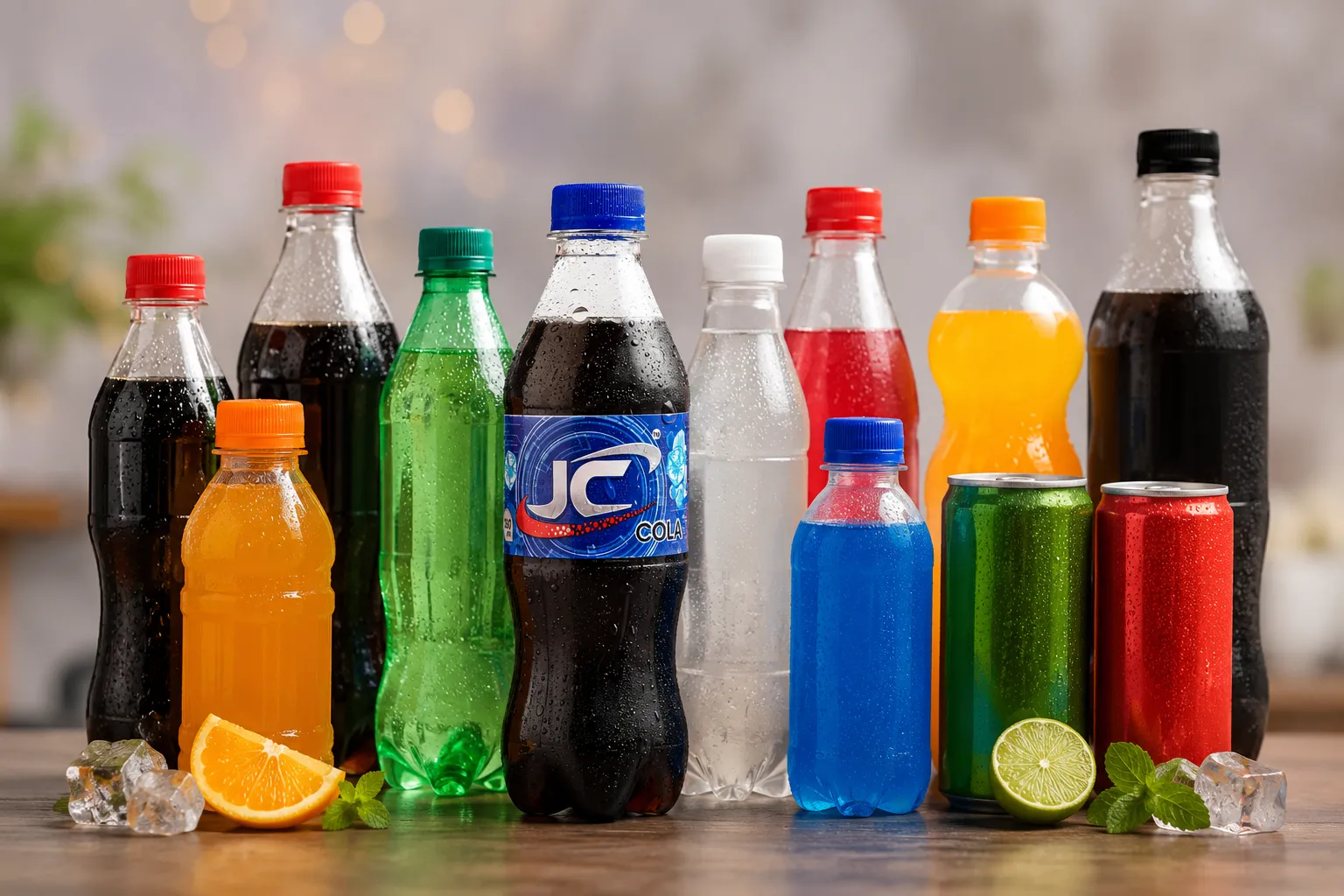
Leading beverage companies in India use a wide range of soft drink bottles depending on product positioning, target audience, and regional market demand. In a highly competitive FMCG landscape, packaging plays a key role in attracting consumers and strengthening brand identity.
Common Packaging Formats Used by Brands
- Standard PET Bottles (200 ml to 2 L): These are the most widely used cold drink bottle formats in India. PET bottles are preferred for their lightweight structure, affordability, and ease of distribution across urban and rural markets.
- Returnable Glass Bottles (Select Markets): Glass bottles are still used in certain regions, especially for traditional distribution channels. They help maintain a classic brand feel and are often used in returnable packaging systems.
- Slim Aluminum Cans (Premium Segment): Cans are increasingly popular in urban markets, especially for premium soft drinks and energy beverages. Their compact design and premium appeal make them a strong choice for modern consumers.
- Promotional and Limited-Edition Packaging: Brands frequently introduce special packaging designs during festivals, campaigns, and brand promotions. These help increase visibility and attract younger consumers.
Major players like JC Drink and several regional FMCG brands continuously innovate their packaging strategies to stay relevant. From eco-friendly materials to eye-catching limited-edition bottles, packaging has become a powerful marketing tool in India’s fast-growing beverage industry.
Business Perspective: Role of Packaging in FMCG Success
In the FMCG industry, packaging is far more than just a container—it is a strategic tool that drives marketing, branding, and distribution success for every cold drink bottle in the market. In India’s highly competitive beverage sector, packaging often determines whether a product gets noticed or ignored on the retail shelf.
Importance in Business Growth
Effective packaging plays a major role in strengthening FMCG performance:
- Enhances brand visibility: Eye-catching design helps products stand out in crowded retail environments
- Improves product safety and shelf life: Ensures beverages remain fresh, secure, and tamper-proof
- Supports logistics efficiency: Lightweight and durable packaging reduces transportation costs and damage
- Influences purchase decisions: Consumers often choose products based on appearance and convenience
In India, where retail is highly fragmented and dominated by small stores, strong packaging design ensures better recognition and recall even in compact shelf spaces.
Distribution and Retail Impact
Efficient distribution of cold drink bottle products is essential for FMCG success in India’s diverse and complex market. A strong supply chain ensures that beverages reach both urban supermarkets and rural kirana stores on time and in good condition.
- Urban markets prefer chilled, ready-to-drink beverages in convenient packaging
- Rural markets prioritize affordability and larger pack value for longer usage
- Kirana stores continue to serve as the backbone of beverage distribution across India
Retailers also focus on stocking bottle sizes that move quickly and provide better profit margins, making packaging strategy a key factor in sales performance.
Seasonal Demand Trends in India
Demand for cold drinks in India is strongly influenced by seasonal patterns:
- Summer (March–June): Peak season with high demand across all drink bottle sizes
- Monsoon season: Moderate sales, with preference for smaller, single-serve bottles
- Winter season: Lower overall consumption, with a shift toward premium and flavored beverages
Understanding these seasonal trends allows FMCG companies to optimize production schedules, manage inventory efficiently, and plan distribution more effectively across regions.
Conclusion
The cold drink bottle industry in India has come a long way, evolving from traditional glass packaging to modern, lightweight PET bottles and innovative can formats. Today, a wide range of drink bottle sizes—from small single-serve packs to large family bottles—ensures that beverages are accessible, affordable, and convenient for every type of consumer.
With changing lifestyles, growing retail networks, and increasing demand from Tier 2 and Tier 3 cities, beverage packaging India continues to evolve rapidly. Factors like sustainability, cost efficiency, and consumer convenience are now shaping how brands design and distribute soft drink bottles across the country.
For FMCG businesses, retailers, and distributors, understanding packaging trends and bottle size variations is key to staying competitive in this fast-growing market.
To explore more insights, packaging solutions, and beverage industry updates, visit JC Drink and stay ahead in India’s dynamic soft drink industry.
Frequently Asked Questions
1. What is a cold drink bottle?
A cold drink bottle is a packaged container used to store and sell soft drinks or carbonated beverages in different sizes and materials like PET, glass, and cans.
2. What are the most common cold drink bottle sizes in India?
The most common drink bottle sizes in India are 200 ml, 250 ml, 300 ml, 500 ml, 600 ml, 1 liter, and 2 liters.
3. Which material is most used for cold drink bottles in India?
PET bottles are the most widely used material in India due to their lightweight nature, low cost, and recyclability.
4. Why are PET bottles popular in beverage packaging in India?
PET bottles are popular because they are durable, easy to transport, cost-effective, and suitable for mass distribution across urban and rural markets.
5. What is the difference between glass and PET cold drink bottles?
Glass bottles are heavier and often used for premium beverages, while PET bottles are lightweight, cheaper, and more commonly used for mass-market soft drinks.
6. What is the most popular soft drink bottle size?
The 250 ml to 500 ml range is the most popular size because it is affordable and suitable for single-serve consumption.
7. Are cold drink bottles recyclable in India?
Yes, PET bottles and aluminum cans are recyclable, and the beverage industry is increasingly focusing on sustainable packaging solutions.
8. How do drink bottle sizes affect pricing?
Smaller bottles are cheaper and attract impulse buyers, while larger bottles offer better value and are preferred by families.
9. Which soft drink bottles are used by major brands in India?
Brands like Coca-Cola and PepsiCo use PET bottles, glass bottles, aluminum cans, and promotional limited-edition packaging.
10. What trends are shaping beverage packaging in India?
Key trends include eco-friendly materials, lightweight PET designs, resealable caps, and smaller affordable packaging sizes.